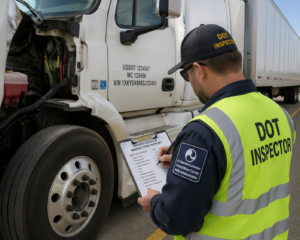
Updated September 2026
Quick Answer: The CVSA International Roadcheck is the largest annual commercial vehicle enforcement event in North America. The 2026 International Roadcheck took place May 12–14, with electronic logging device (ELD) tampering as the driver focus and cargo securement as the vehicle focus. CVSA released the results on August 25, 2026: across 54,575 inspections, inspectors placed 10,350 vehicles out of service (19%) and 3,184 drivers (5.8%). Brakes led vehicle violations again at 24.3%, and on the driver side the top violation changed — no medical card displaced hours of service. The vehicle items inspected during Roadcheck closely mirror the federal DOT annual inspection requirements under 49 CFR §396.17, so fleets with properly trained §396.19 qualified inspectors consistently perform better during Roadcheck enforcement.
The CVSA International Roadcheck is the most concentrated commercial vehicle inspection event in the world. For 72 hours each spring, certified inspectors conduct tens of thousands of roadside inspections, identifying violations, issuing out-of-service orders, and creating enforcement pressure that ripples through fleet operations long after the event ends.
This guide covers what Roadcheck is, what inspectors check during the event, the full 2026 results, and how building year-round inspection readiness through proper DOT annual inspection training prepares your fleet for Roadcheck and every other enforcement opportunity.
2026 CVSA International Roadcheck Results
CVSA published the results on August 25, 2026. Across the 72-hour event, inspectors conducted 54,575 inspections — roughly 13 commercial vehicle and driver inspections every minute across North America.
- 10,350 vehicles placed out of service — 19%
- 3,184 drivers placed out of service — 5.8%
- 13,534 total out-of-service orders issued
- 81% of vehicles and 94.2% of drivers had no out-of-service violations
- 17,680 CVSA decals issued to vehicles that passed eligible inspections
How 2026 compares to 2025
| 2025 | 2026 | |
|---|---|---|
| Inspections | 56,178 | 54,575 |
| Vehicles out of service | 10,148 (18.1%) | 10,350 (19%) |
| Drivers out of service | 3,342 (5.9%) | 3,184 (5.8%) |
| Brake system violations | 3,304 (24.4%) | 3,379 (24.3%) |
| CVSA decals issued | 16,521 | 17,680 |
| Top driver violation | Hours of service (32.4%) | No medical card (27%) |
The brake share is essentially unchanged — 24.4% to 24.3%. Two consecutive years, more than 110,000 inspections, and the top failure category moves by one-tenth of a percentage point. That stability is the most useful thing in the data: you know exactly where to focus.
Vehicle violations, 2026
Brake systems led again with 3,379 out-of-service violations, 24.3% of all vehicle out-of-service violations. Cargo securement, this year’s vehicle focus area, produced 1,724 violations at 12.4% and ranked fourth overall.
Working backward from CVSA’s published percentages gives the denominator: 3,379 at 24.3% and 1,724 at 12.4% both imply roughly 13,900 total vehicle out-of-service violations for the event. Two independent figures agreeing is a useful sanity check.
Driver violations, 2026 — and the change
Hours of service had led the driver category for years. In 2026 it did not.
- No medical card — 1,072 violations, 27% of all driver out-of-service violations, the new number one
- Hours of service — 929, second
- No commercial driver’s license — 620, third
- English language proficiency — 361
- False records of duty status — 266
- ELD tampering — 146 out-of-service orders, 3.7%, seventh most-cited, and the 2026 driver focus area
A medical certificate that accounted for 14.9% of driver out-of-service violations in 2025 and 27% in 2026 is not a driving problem. It is a calendar problem, and it is entirely preventable with a tracked expiration date.
One genuinely positive number: only 1.25% of drivers inspected were not wearing a seat belt, producing 667 violations across the event.
For the full breakdown of what actually parks trucks, see why trucks fail DOT inspections.
What Is the CVSA International Roadcheck?
The CVSA International Roadcheck is an annual 72-hour enforcement event organized by the Commercial Vehicle Safety Alliance. Since 1988, certified inspectors from federal, state, provincial, and local agencies have conducted concentrated roadside inspections at weigh stations, fixed inspection facilities, and temporary pop-up sites across the United States, Canada, and Mexico.
This is not a random audit. It is a coordinated enforcement campaign, and the results directly impact carrier safety records, CSA scores, and overall compliance standing with FMCSA.
Roadcheck targets the same systems and credentials enforced during routine roadside inspections throughout the year. The difference is volume and visibility. The 72-hour concentration creates a high-stakes window where violations compound quickly, out-of-service orders multiply, and unprepared fleets face significant operational disruption.
When Does CVSA International Roadcheck Happen Each Year?
CVSA International Roadcheck typically takes place in May. The 2026 event ran from May 12 through May 14. The 2025 event ran May 13 through May 15. The 2024 event ran May 14 through May 16.
While exact dates vary slightly each year, the pattern is consistent: a 72-hour window in mid-May. Carriers can plan their preventive maintenance and driver readiness cycles around this annual timing, treating the weeks leading up to Roadcheck as a natural compliance checkpoint.
CVSA announces the specific dates and focus areas for each year’s event several months in advance through its website and industry communications. Note that Roadcheck is not the only enforcement window — CVSA also runs Brake Safety Week each August and an unannounced Brake Safety Day. See our Brake Safety Week guide.
What Happens During a CVSA Level I Inspection?
The North American Standard Level I Inspection is the most comprehensive roadside inspection a commercial vehicle can undergo. It is a 37-step procedure covering both driver credentials and vehicle mechanical fitness.
The driver portion includes verification of a valid commercial driver’s license, medical examiner’s certificate, record of duty status, hours-of-service compliance, seat belt usage, Drug and Alcohol Clearinghouse status, and skill performance evaluation certificate if applicable.
The vehicle portion examines the mechanical fitness of the truck or motorcoach, including the brake system, tires and wheels, steering mechanisms, suspension components, exhaust system, lighting and electrical systems, coupling devices, frame, and cargo securement.
If inspectors identify critical violations during any part of the inspection, they can issue an out-of-service order. A driver placed out of service cannot operate the vehicle. A vehicle placed out of service cannot move until the violation is corrected. For fleets, that means unexpected downtime, towing costs, repair scrambles, and missed deliveries.
What Other Inspection Levels Exist?
Level II is a walk-around driver and vehicle inspection without any under-vehicle work. Faster than Level I but still thorough on what can be seen from the outside.
Level III focuses on driver credentials and documentation. No vehicle inspection. Used when officers need to quickly verify driver compliance.
Level IV is a special inspection for a specific feature or component, often as a follow-up to identified issues or tied to a focused campaign. See what is a CVSA Level IV inspection.
Level V is a vehicle-only inspection conducted without the driver present. Often performed during cargo operations or at terminals.
Level VI applies to vehicles transporting transuranic waste and high-level radioactive material under specific federal regulations.
A clean Level I or Level V inspection earns a CVSA decal, which signals that the vehicle was inspected with no critical violations found. The decal remains valid for up to three consecutive months, and a vehicle displaying a current decal is generally not selected for another Level I during that window. In 2026, inspectors issued 17,680 of them.
The Connection Between Roadcheck and DOT Annual Inspections
Here is the operational reality that many fleets miss: the vehicle items inspectors check during CVSA Roadcheck are largely the same items qualified inspectors examine during the federal DOT annual inspection required under 49 CFR §396.17.
The Roadcheck Level I vehicle scope and the §396.17 annual inspection scope overlap almost completely. Both cover brake systems, lighting, steering, suspension, tires and wheels, exhaust, coupling devices, frame, fuel system, and cargo securement under the standards in 49 CFR Part 393 and Appendix A (formerly Appendix G).
The difference is timing. Roadcheck catches violations after a truck is on the road, often during peak operational pressure. A properly conducted annual inspection by a §396.19 qualified inspector catches the same violations months earlier in your own shop, on your own schedule, at a fraction of the cost of an out-of-service order plus emergency repair.
One nuance worth knowing before you measure: the annual inspection standard, the CVSA out-of-service criteria, and the Part 393 operating minimum are not always the same number. We separate all three in legal, out-of-service, or failed inspection. And for how the two inspection types differ procedurally, see DOT annual inspection vs roadside inspection.
This is why fleets with strong in-house inspection programs consistently outperform during Roadcheck. They are not preparing for Roadcheck specifically. They are running compliant inspection programs year-round. Roadcheck is just the moment when that ongoing diligence becomes visible.
2026 Focus Areas: ELD Tampering and Cargo Securement
Each year, CVSA selects one driver violation category and one vehicle violation category for special emphasis. The 2026 focus areas were ELD tampering, falsification, and manipulation on the driver side, and cargo securement on the vehicle side.
Driver focus: ELD tampering. Inspectors paid particular attention to electronic logging device records, reviewing each driver’s record of duty status for signs of tampered, falsified, or manipulated entries. This included driving time recorded while a device showed as disconnected, unassigned driving miles, and records edited without proper annotation.
The results: 146 out-of-service orders, 3.7% of driver out-of-service violations, seventh most-cited. Lower than the emphasis might suggest, though the focus area drives data collection as much as enforcement volume.
Vehicle focus: cargo securement. Inspectors checked whether cargo was properly contained, immobilized, and secured to prevent leaking, spilling, blowing, or falling from the vehicle. This applied to all freight types including flatbed loads, van trailers, tankers, and specialized cargo.
The results: 1,724 out-of-service violations, 12.4% of the vehicle total, ranking fourth overall. Officers evaluated whether loads were properly blocked and braced, whether tiedowns and anchor points were in good condition and sufficient number, whether tailboards and end gates were properly secured, and whether there were visible signs cargo could shift or fall in transit.
For the Part 393 Subpart I requirements including working load limits and tiedown counts, see our DOT cargo securement rules guide.
What Vehicle Systems Do CVSA Inspectors Check?
The vehicle portion of a Level I inspection covers every major safety system, examined against the standards in 49 CFR Part 393 and Appendix A to Part 396:
Brake Systems. Pushrod travel, slack adjuster alignment, air leaks, ABS warning lamps, spring brake housing condition, and the tractor-trailer protection system. Brake violations have consistently been the number one reason vehicles are placed out of service — 24.3% of all vehicle out-of-service violations in 2026 and 24.4% in 2025. For brake-specific qualification requirements, see our DOT Air Brake Certification Requirements guide, and note that a CDL air brake endorsement does not by itself satisfy the separate §396.25 brake inspector qualification, as we explain in does a CDL air brake endorsement make you a qualified brake inspector and 396.19 vs 396.25.
Coupling Devices. Fifth wheel mounting, locking jaw engagement around the kingpin shank, safety latch, and for trailers, safety chains and breakaway systems.
Steering. Secured steering wheel, components free of cracks or welds, and steering lash within tolerance.
Suspension. Springs, shackles, U-bolts, hangers, and axle alignment.
Tires, Wheels, Rims, and Hubs. Tread depth, sidewall integrity, no regrooved tires on steering axles, secure lugs and clamps, and lubricant leaks. Tires were the 2025 vehicle focus and produced 2,899 out-of-service violations that year, 21.4% of the vehicle total.
Frame and Trailer Body. Corrosion, cracks, crossmember condition, and defects that could lead to frame collapse.
Fuel and Exhaust Systems. Secure mounting, no leaks, exhaust components not contacting wiring or brake lines.
Lighting. Required lamps for color, mounting, visibility, and proper operation.
Cargo Securement. Tiedown count and condition, anchor point integrity, blocking and bracing, end gate and tailboard security.
How to Prepare Your Fleet for Future Roadcheck Events
The most effective way to prepare is to build inspection readiness into year-round operations rather than scrambling in the weeks before the event. That said, specific preparation in the lead-up makes a meaningful difference.
Review driver qualification files. Confirm CDL credentials are current, medical examiner’s certificates are not expired, and drivers are cleared in the Drug and Alcohol Clearinghouse. This is now the single highest-value item on the list — a missing or expired medical card became the number one driver out-of-service violation in 2026, at 27%.
Audit ELD records. Review drivers’ electronic logs for unassigned driving time, gaps between entries, and edits without proper annotations. Make sure every driver can transfer their ELD data to an inspector. If you are using an ELD removed from FMCSA’s approved list, replace it immediately.
Conduct pre-trip and annual vehicle inspections. Walk through the same Level I inspection procedure on every vehicle, with particular attention to brake systems, tires, lighting, coupling devices, and steering. For the daily layer, see DVIR requirements under §396.11.
Inspect cargo securement equipment. Ensure tiedowns, chains, straps, and binders are in good condition, verify the number of tiedowns meets the minimum for the length and weight of the cargo, and check that blocking and bracing are adequate. Train drivers to re-check their load at every stop.
Educate your drivers. Make sure they know what to expect during a Level I inspection, can present all required documentation quickly, know how to transfer ELD data, and understand current hours-of-service rules.
Why Year-Round Compliance Matters More Than Roadcheck Prep
The violations inspectors check during Roadcheck are the same ones they enforce every day of the year. Roadcheck is a concentrated enforcement window, but roadside inspections happen constantly. The best strategy is not to cram for three days in May. It is to build inspection readiness into daily operations.
That means maintaining a consistent preventive maintenance schedule, conducting regular DOT annual inspections on every vehicle, keeping driver files current and organized, and training your team to understand what inspectors look for and why it matters. For the official CVSA program details and current focus areas, see the CVSA International Roadcheck page.
Fleets that treat compliance as an ongoing priority consistently have lower violation rates, better CSA scores, and fewer costly out-of-service disruptions. For more on the current enforcement environment, see DOT Compliance Enforcement Is Intensifying in 2026.
How DOT Annual Inspection Training Prepares Your Fleet
Understanding the DOT annual inspection process is one of the most effective ways to prepare your fleet for Roadcheck and year-round enforcement. When your in-house inspectors are checking the same components that roadside inspectors check, using the same federal standards, problems get identified and fixed in your shop before they become violations on the road.
Under 49 CFR §396.19, the motor carrier is responsible for ensuring annual inspections are performed by qualified inspectors. For details on who can perform these inspections, see who can perform DOT annual inspections, our guide to FMCSA §396.19, and for documentation, our FMCSA inspector qualifications form guide.
81% of vehicles passed. The other 19% got parked.
The difference is rarely luck. Brakes, tires, lights, and cargo securement account for the overwhelming majority of out-of-service orders, and every one of them is an Appendix A component your own qualified inspector examines during the annual inspection.
Our DOT Annual Inspection Training Course covers the full inspection under 49 CFR Part 393 and Appendix A to Part 396 — the same standards a Level I inspector applies — and produces three records for your file:
- Certificate of completion — documented training under §396.19(a)(3)(ii)(A)
- Inspector qualification form — the §396.19(b) record your carrier retains
- Inspection checklist — for performing and recording annual inspections
100% online, self-paced, lifetime access. The qualification does not expire.
Training a maintenance team? Group registration with volume discounts for 3 or more.
For the path to qualifying, see how to get certified to do DOT inspections, and if you are an owner-operator, can I do my own DOT annual inspection.
Frequently Asked Questions
What were the 2026 CVSA International Roadcheck results?
CVSA released them on August 25, 2026. Across 54,575 inspections conducted May 12 to 14, inspectors placed 10,350 vehicles out of service (19%) and 3,184 drivers (5.8%), issuing 13,534 total out-of-service orders. Brakes led vehicle violations at 3,379, or 24.3%. Cargo securement, the vehicle focus area, produced 1,724 violations at 12.4% and ranked fourth. Inspectors issued 17,680 CVSA decals.
When does CVSA International Roadcheck happen?
Annually in May. The 2026 event ran May 12-14, the 2025 event May 13-15, and the 2024 event May 14-16. Exact dates vary but typically fall in a 72-hour window in mid-May.
What percentage of vehicles are placed out of service during Roadcheck?
During the 2026 Roadcheck, 19% of vehicles inspected were placed out of service and 5.8% of drivers. Put another way, 81% of vehicles and 94.2% of drivers passed with no out-of-service violations. The 2025 event produced an 18.1% vehicle rate and 5.9% driver rate.
What is the most common driver violation during Roadcheck?
In 2026 it was not having a current medical card, with 1,072 violations accounting for 27% of all driver out-of-service violations. Hours of service ranked second at 929, no CDL third at 620, English language proficiency at 361, and false records of duty status at 266. This was a change from 2025, when hours of service led at 32.4% and no medical card accounted for 14.9%.
What were the 2026 Roadcheck focus areas?
Cargo securement for vehicles and ELD tampering, falsification, and manipulation for drivers. Cargo securement produced 1,724 out-of-service violations at 12.4%, ranking fourth. ELD tampering produced 146 out-of-service orders at 3.7%, seventh most-cited.
What is a CVSA Level I inspection?
The most comprehensive roadside inspection a commercial vehicle can undergo. It is a 37-step procedure covering both the driver and the vehicle, including credentials, hours of service, brake systems, tires, lighting, steering, suspension, and cargo securement.
How long does a CVSA Roadcheck inspection take?
A complete Level I inspection typically takes 30 to 60 minutes depending on vehicle complexity and any issues identified. Level II inspections are faster at 15 to 30 minutes. Level III driver-only inspections may take 10 to 20 minutes.
What is a CVSA decal and how long is it valid?
A decal awarded to vehicles that pass a Level I or Level V inspection with no critical violations. It remains valid for up to three consecutive months, and a vehicle displaying a current decal is generally not selected for another Level I during that window. Inspectors issued 17,680 during the 2026 Roadcheck.
What is the connection between Roadcheck and the DOT annual inspection?
The vehicle items checked during a Roadcheck Level I inspection closely mirror the federal DOT annual inspection requirements under 49 CFR §396.17. Both examine the same systems against 49 CFR Part 393 and Appendix A. Fleets with qualified §396.19 inspectors performing thorough annual inspections consistently perform better during Roadcheck, because the defects have already been found and fixed.
What are the most common vehicle violations during Roadcheck?
Brake systems lead consistently, at 24.3% of vehicle out-of-service violations in 2026 and 24.4% in 2025. Tires were second in 2025 at 21.4%, and cargo securement ranked fourth in 2026 at 12.4%. Brakes, tires, lights, and cargo securement together account for the large majority of out-of-service orders.
The Bottom Line
CVSA International Roadcheck is the most concentrated commercial vehicle enforcement event in North America. The 2026 results show 19% of vehicles and 5.8% of drivers placed out of service — and, more usefully, that the failure categories have not changed. Brakes led again at 24.3%, essentially identical to 2025.
Fleets that prepare through year-round inspection diligence rather than last-minute scrambling consistently outperform during the event and throughout the year. The vehicle items inspectors check mirror the federal DOT annual inspection requirements under 49 CFR §396.17. Properly trained §396.19 qualified inspectors catch those violations months before they become out-of-service orders.
If your fleet relies on outsourced inspections or your in-house inspectors lack formal §396.19 qualification, the time to address that is now, not when the next Roadcheck approaches.
Josh Lopez has spent more than 10 years in the trucking and freight industry, working across shippers, carriers, brokerage, and reefer LTL. He writes about DOT compliance, FMCSA regulations, and commercial vehicle inspection to help mechanics, owner-operators, and fleet managers stay compliant on the road.