Did Texas really end vehicle safety inspections?
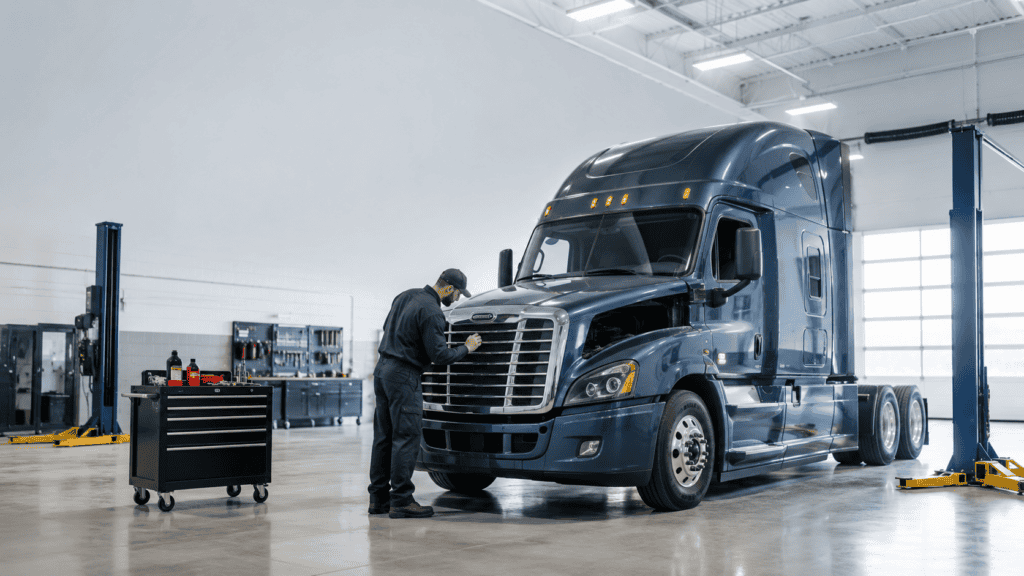
Only for non-commercial vehicles. Under House Bill 3297, Texas ended the mandatory state safety inspection for passenger cars and other non-commercial vehicles beginning January 1, 2025. Those drivers now pay an inspection program replacement fee at registration instead. Commercial vehicles were specifically excepted. The Texas Department of Public Safety states it plainly: all commercial vehicles are still required to have a commercial inspection. So the headline “Texas ends vehicle inspections” is true for cars and false for trucks. And here is the part that matters more than the headline. Because the Texas commercial inspection program survived, it is still a mandatory state inspection program, and that has direct consequences under the federal rules.Do commercial vehicles still need a DOT annual inspection in Texas?
Yes, and the two requirements are connected rather than separate. Under the Texas Administrative Code, all commercial motor vehicles registered in Texas must pass an annual inspection of all safety equipment required by the Federal Motor Carrier Safety Regulations. A person may not operate a commercial motor vehicle registered in Texas unless the operator possesses a valid commercial motor vehicle inspection report, and that report is issued by a certified commercial vehicle inspection station. Separately, the federal rule at 49 CFR 396.17 requires an annual inspection for every commercial motor vehicle in interstate commerce, generally any vehicle over 10,000 pounds GVWR, any vehicle carrying placarded hazardous materials, or any vehicle designed to carry enough passengers to qualify. Texas DPS enforces commercial vehicle safety aggressively at weigh stations and along the major freight corridors, I-10, I-35, I-20, I-45, and I-30. If you cannot produce a current inspection during a roadside check, the vehicle can be placed out of service on the spot.Can a Texas carrier self-inspect under the federal rule?
It depends entirely on where the vehicle is plated, and this is the question most guides get wrong. If your commercial motor vehicle is registered in Texas, the answer is no. Section 49 CFR 396.23(a)(1) says that if a commercial motor vehicle is subject to a mandatory inspection program that FMCSA has determined is as effective as 396.17, the motor carrier must meet the requirement of 396.17 through that inspection program. And 49 CFR 396.17(d), the provision that permits a motor carrier to perform its own annual inspection, applies only to vehicles that are not subject to an inspection under 396.23(a)(1). Texas runs exactly that kind of mandatory commercial inspection program. So a Texas-plated CMV satisfies the federal annual requirement by passing the Texas commercial inspection at a certified station. The federal self-inspection route in 396.17(d) is not available to it. If your vehicle is plated in another state and you are simply operating in or through Texas, the answer is yes. The Texas compulsory program reaches vehicles registered in Texas. An out-of-state carrier running through Texas is not subject to it, and meets 396.17 the federal way, which includes self-inspection using an inspector qualified under 49 CFR 396.19, or a commercial garage acting as the carrier’s agent. We would rather tell you this plainly than sell you a shortcut that does not exist. If you run Texas plates, a training certificate does not let you skip the Texas commercial inspection station.Where inspector qualification still matters in Texas
Two places, and both of them are real. Brakes, no matter which route you take. Under 49 CFR 396.25, any person who inspects, maintains, services, or repairs brakes on a commercial motor vehicle must meet separate brake inspector qualification requirements, and the carrier must maintain evidence of that qualification at its principal place of business. This applies to your shop regardless of where your trucks are plated and regardless of who performs the annual inspection. Texas DPS taking your truck through a commercial inspection station once a year does not qualify the mechanic who adjusts your brakes the other fifty-one weeks. And a CDL air brake endorsement does not satisfy 396.25. FMCSA has stated that directly. See does a CDL air brake endorsement make you a qualified brake inspector and our DOT air brake certification requirements guide. Out-of-state equipment, and any vehicle outside the Texas program. If you run trailers or power units plated outside Texas, or you operate a mixed fleet, those units fall under the federal route and need a 396.19-qualified inspector. Many Texas-based carriers run exactly this kind of mixed equipment and never realize half their fleet is on a different compliance track.Who can perform a DOT annual inspection under the federal route?
A person who meets the qualification standard in 49 CFR 396.19. That standard has three parts. The inspector must understand the inspection criteria in Part 393 and Appendix A to Part 396 and be able to identify defective components. The inspector must have mastered the methods, procedures, tools, and equipment used in an inspection. And under 49 CFR 396.19(a)(3), the inspector must be capable of performing the inspection either through a Federal- or State-sponsored training program or a qualifying state certificate, or through a combination of training and/or experience totaling at least one year. The carrier keeps evidence of that qualification on file for as long as the person performs inspections, plus one year afterward. For the full breakdown, see who can perform DOT annual inspections and our guide to FMCSA 396.19.What does the annual inspection cover?
It is a measured, pass-or-fail check against the federal minimum periodic inspection standards in Appendix A to Part 396: brakes, steering, suspension, frame, tires and wheels, lighting, coupling devices, fuel system, exhaust, and the other listed components. In a combination vehicle, each unit is inspected separately. A tractor and its trailer are inspected individually, not as one rig. Keep in mind that a roadside enforcement inspection by Texas DPS is not the same thing as your annual periodic inspection. The annual inspection is a separate, scheduled inspection that must be performed and documented every 12 months, no matter how clean your roadside record looks.How long must inspection records be kept in Texas?
Under the federal recordkeeping rule, 49 CFR 396.21, the periodic inspection report must be kept for 14 months from the date of the inspection. A copy must be kept where the vehicle is housed or maintained, and proof of the current inspection must be on the vehicle. If you self-inspect under the federal route, you also keep evidence of your inspector’s 49 CFR 396.19 qualification on file, and separate 396.25 evidence for anyone performing brake work. Note that the retention periods differ: inspection reports run 14 months, while inspector qualification evidence runs for the duration of the inspector’s service plus one year.How training fits, and where it does not
Being straight about this matters more than a sales pitch. Training does not exempt a Texas-plated truck from the Texas commercial inspection station. No course does. Anyone telling you otherwise is selling you something you cannot use. Training is what qualifies the people doing the work. If you maintain commercial vehicles in Texas, your mechanics need documented brake inspector qualification under 396.25, and if any of your equipment falls under the federal route rather than the Texas program, your inspector needs documented 396.19 qualification too. In both cases the requirement is the same shape: understand the federal standards, master the methods and tools, and have training and experience the carrier can prove on paper. Most working mechanics already have the experience half. What is usually missing is documented training in the federal inspection standards rather than knowledge picked up on the job, and that gap is exactly what an auditor finds.Your mechanics still need documented qualification — whichever route your trucks take.
Texas DPS running your truck through a station once a year does not qualify the person adjusting your brakes the other fifty-one weeks. Under §396.25 that mechanic needs documented brake inspector qualification, and the carrier keeps the evidence on file. And if any of your equipment is plated outside Texas, that portion of your fleet is on the federal route and needs a §396.19 qualified inspector.
Our DOT Annual Inspection Training Course covers the inspection criteria in 49 CFR Part 393 and Appendix A to Part 396, including the brake standards behind both requirements. Every enrollment includes:
- Certificate of completion — documented training under §396.19(a)(3)(ii)(A)
- Inspector qualification form — the §396.19(b) record your carrier retains
- Inspection checklist — for performing and recording inspections
To be clear about what it is not: this course does not exempt a Texas-plated commercial vehicle from the Texas commercial inspection program. Nothing does.
Several mechanics or a mixed fleet? Group registration with volume discounts.
Texas DOT Annual Inspection Frequently Asked Questions
Did Texas end inspections for commercial vehicles?
No. Texas ended state safety inspections for non-commercial vehicles under HB 3297 effective January 1, 2025, but commercial vehicles were carved out. Texas DPS confirms all commercial vehicles are still required to have a commercial inspection.
Do trucks in Texas still need a DOT annual inspection?
Yes. Commercial motor vehicles registered in Texas must pass an annual inspection of the safety equipment required by the Federal Motor Carrier Safety Regulations, and commercial motor vehicles in interstate commerce must meet the federal annual inspection requirement under 49 CFR §396.17.
Can I self-inspect my Texas-plated trucks under the federal rule?
No. Under 49 CFR §396.23(a)(1), a vehicle subject to a mandatory state inspection program that FMCSA has approved must meet the §396.17 requirement through that program, and the federal self-inspection provision in §396.17(d) applies only to vehicles not subject to it. Texas-registered commercial vehicles go through a certified Texas commercial inspection station.
What if my trucks are plated in another state but run through Texas?
The Texas compulsory inspection program reaches vehicles registered in Texas. An out-of-state carrier operating in or through Texas is not subject to it and meets 49 CFR §396.17 the federal way, which includes self-inspecting with an inspector qualified under 49 CFR §396.19.
Do I still need a qualified brake inspector in Texas?
Yes, regardless of route. Under 49 CFR §396.25, anyone who inspects, maintains, services, or repairs brakes on a commercial vehicle needs documented brake inspector qualification, and the carrier keeps that evidence on file. Passing an annual inspection at a Texas station does not qualify the mechanic doing brake work the rest of the year. A CDL air brake endorsement does not satisfy it either.
How long must I keep Texas inspection records?
Periodic inspection reports must be kept for 14 months under 49 CFR §396.21, with proof of the current inspection on the vehicle. Inspector qualification evidence, where required, is kept for the duration of the inspector’s service plus one year.
Does your course let me skip the Texas inspection station?
No, and we will not tell you otherwise. If your trucks are Texas-plated, they go through the Texas commercial inspection program. The course covers the federal inspection standards in Part 393 and Appendix A and documents the training component of qualification under §396.19 and the brake standards under §396.25, which is what your mechanics need whether or not your annual inspection happens at a Texas station.
About the author: Josh Lopez has spent more than 10 years in the trucking and freight industry, working across shippers, carriers, brokerage, and reefer LTL. He writes about DOT compliance, FMCSA regulations, and commercial vehicle inspection to help mechanics, owner-operators, and fleet managers understand the rules that govern their operations and stay compliant on the road.